Monitor Multiple
Status Pages
Monitor external status pages across cloud providers, SaaS tools, APIs, and other external dependencies so they can detect incidents, maintenance, and degraded performance faster.
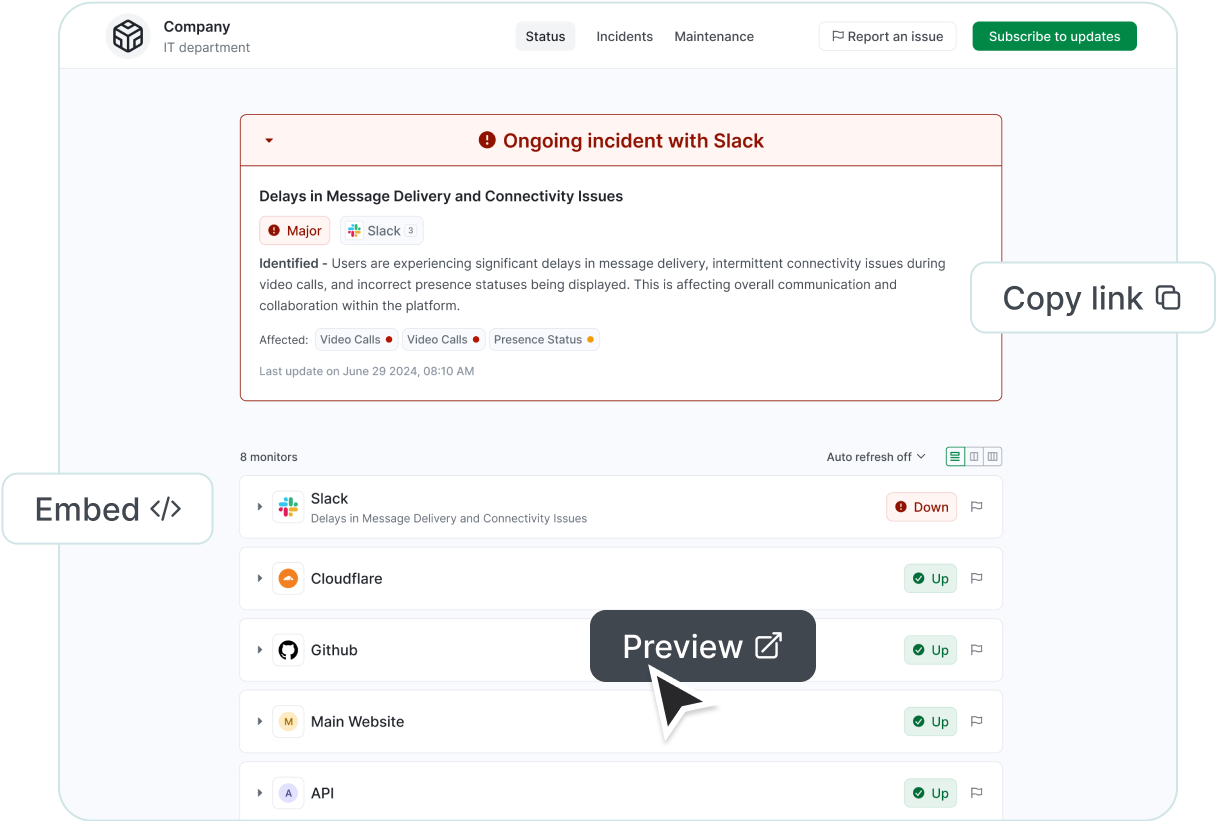
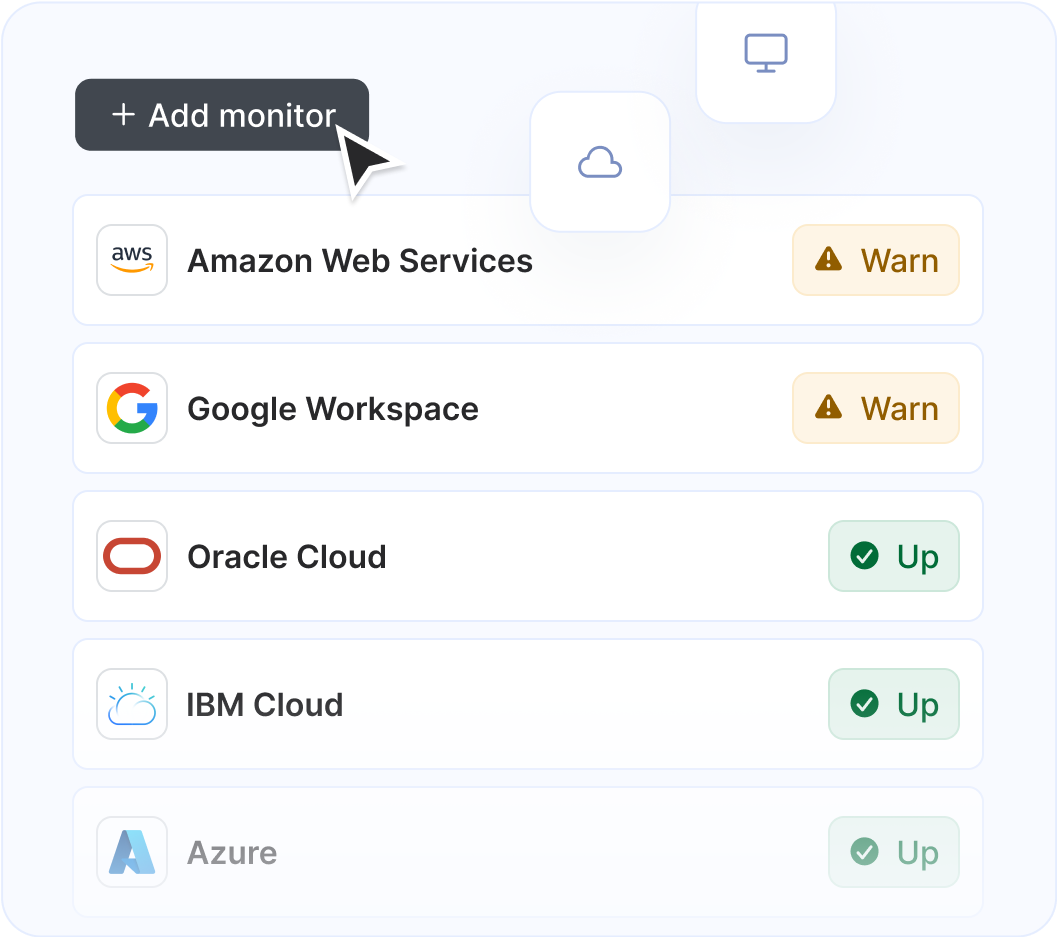
Why monitor external status pages
Many outages happen outside your own infrastructure, which means your uptime tools can still look healthy while users experience failures. Monitoring external status pages gives you a single source of truth for vendor health, so your team can react sooner and avoid wasting time troubleshooting the wrong problem.
-
See vendor incidents in one place.
-
Catch maintenance and outages faster.
-
Reduce manual checking across dozens of providers.
-
Improve incident response with a shared view.
How status page aggregation works
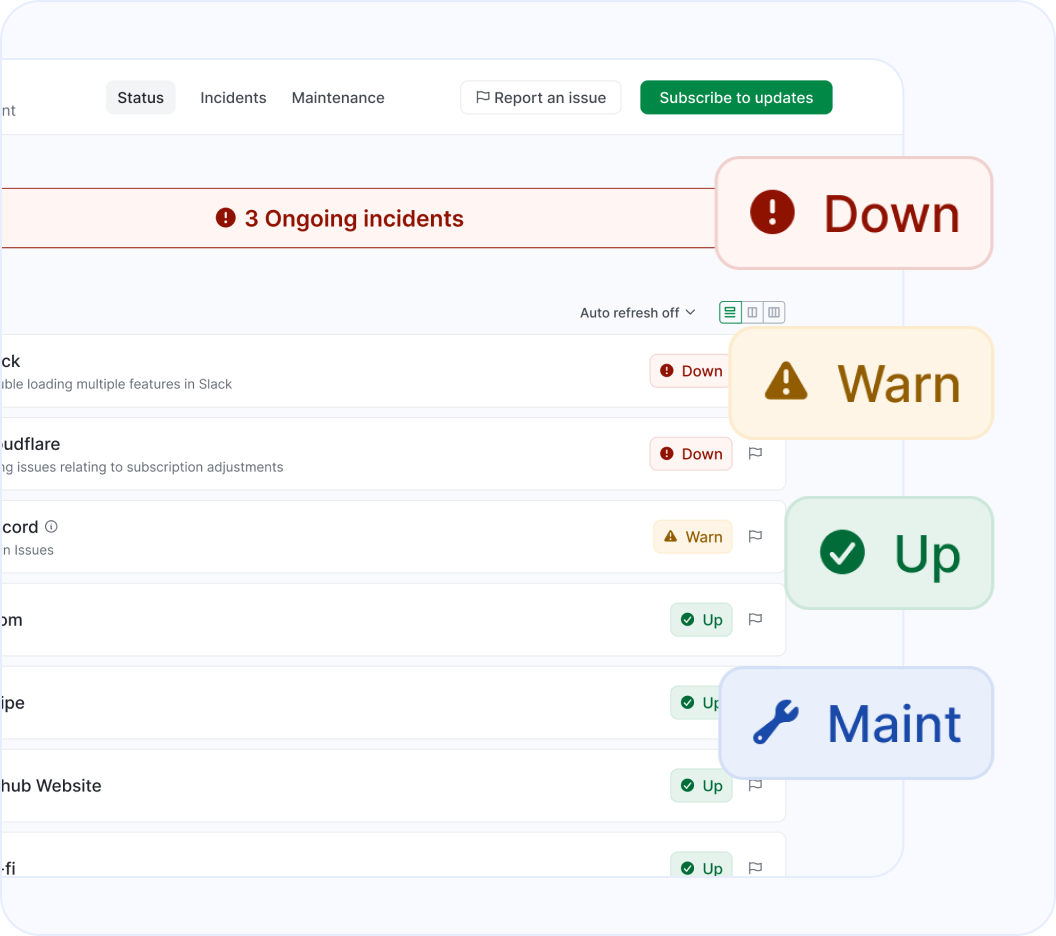
Status page monitoring aggregates together official vendor status pages, incident updates, and service health signals into a centralized dashboard. Instead of visiting each provider separately, your team can monitor external status pages from one system and receive alerts when something changes.
Three steps
Add your dependencies
Automated monitoring
Instant alerts
Why teams choose StatusGator to monitor status pages
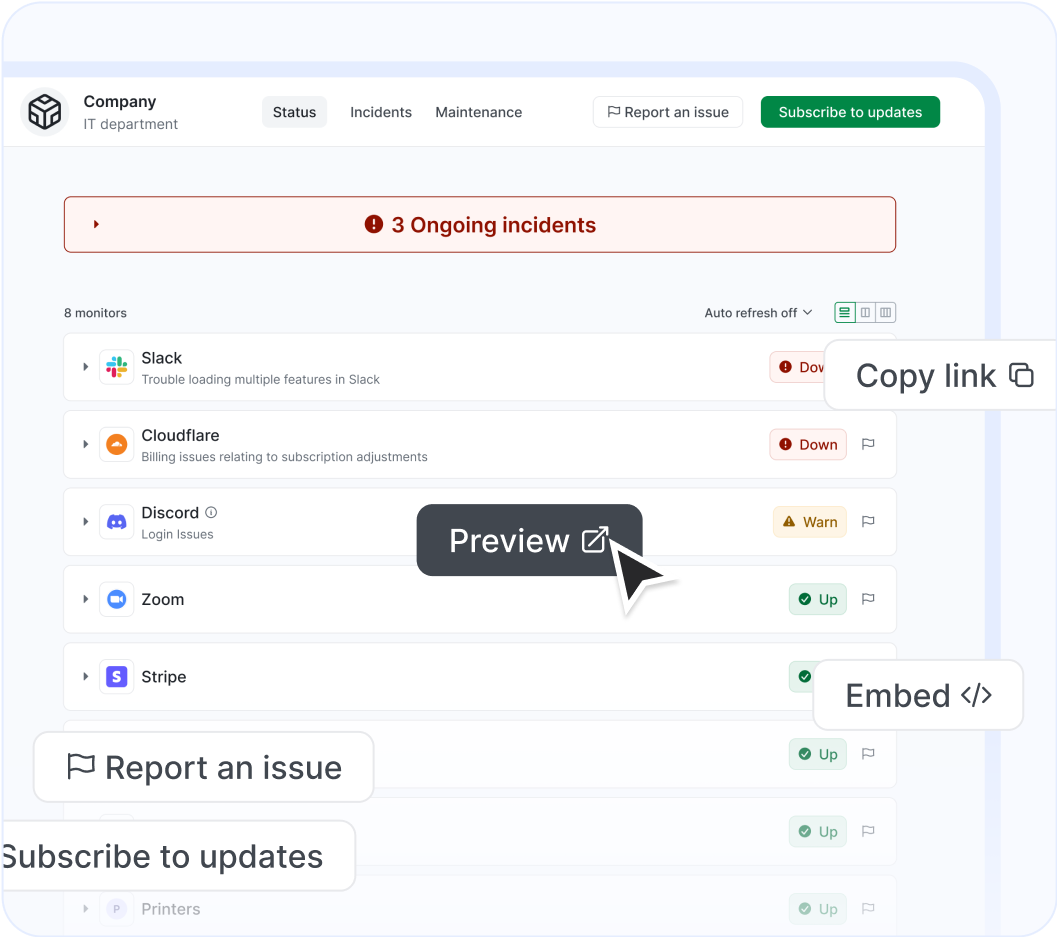
StatusGator is the strongest fit for this category because it is built as a status page aggregator for third-party services, cloud platforms, APIs, and internal monitors. It consolidates thousands of service pages into one dashboard and adds early warning signals and private status ingestion for deeper coverage.
- Monitor multiple status pages at once.
- Monitor external status pages across thousands of services.
- See official incidents and maintenance updates in one place.
- Add early warning coverage for faster detection.
- Use private status ingestion when a service does not expose everything publicly.
Features built for monitoring status pages
Centralized dashboard
Track many vendors in one place instead of checking each status page separately.
External status page monitoring
Watch the status pages of the cloud tools, SaaS platforms, and APIs your team depends on.
Early warning signals
Get alerted when StatusGator detects likely disruptions before official confirmation in some cases.
Private status ingestion
Monitor status data that is not fully visible on public pages.
Alerts and integrations
Send updates to Slack, Teams, email, SMS, webhooks, and incident workflows.
Who uses this
SaaS operations
Teams that rely on many cloud services use status page monitoring to catch upstream incidents before they cascade into customer issues.
IT and DevOps
Engineers use it to monitor external status pages and reduce manual vendor checks during incidents.
Support teams
Customer support teams use a shared status view to answer outage questions faster and more confidently.
MSPs and enterprise teams
Managed service providers and enterprise IT teams use it to track multiple client dependencies from one dashboard.
Status page monitoring vs other monitoring tools
| Category | What it does |
|---|---|
| Uptime monitoring | Checks your own infrastructure and application health. |
| Status page | Reflects changes and updates to the status. |
| Status page monitoring | Monitors external status pages and vendor incident updates. |
| Status page aggregation | Brings many vendor pages into one centralized dashboard. |
| StatusGator | Helps teams monitor multiple status pages, monitor external status pages with early warning signals. |
Frequently asked questions
Yes. Status page aggregators are designed to monitor many vendor pages from one dashboard.
It means tracking the public or private status pages of services your team depends on, such as cloud platforms, SaaS tools, and APIs.
Uptime monitoring checks your own systems, but external outages often happen in third-party services that your app depends on.
Yes. Status page monitoring platforms can send alerts through Slack, Teams, email, SMS, webhooks, and incident tools.
Yes. StatusGator offers Early Warning Signals to help teams detect likely incidents before official acknowledgment in some cases.
Start monitoring the services you depend on
Monitor multiple status pages, monitor external status pages, and keep your team ahead of vendor outages with one centralized dashboard.